

 English
 русский
 Deutsch
Home · News · Industry News · Tip Hex Shank Countersink Drill Bit: One Pass, One Tool, No Protruding Screw Heads
Industry News
Tip Hex Shank Countersink Drill Bit: One Pass, One Tool, No Protruding Screw Heads
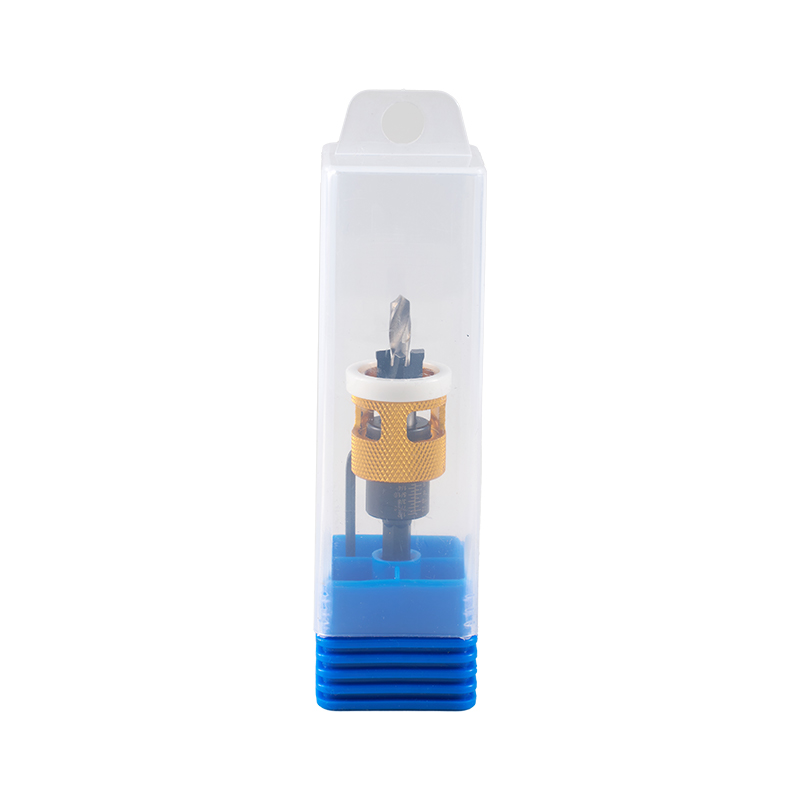
2026-08-21A pilot hole is only half the job. The screw head needs a recess to sit flush, and doing that as a second operation takes time and invites misalignment. A tip hex shank countersink drill bit drills the hole and cuts the countersink in one pass. The hex shank locks into a quick-change chuck. The pilot tip centers the bit. The cone-shaped body reams the recess. Cabinet shops, metal fabricators, and deck crews run these bits because every screw head has to disappear below the surface.
Hex Geometry Keeps the Torque Transfer
Round shanks spin in the chuck when the going gets hard. A 1/4-inch hex shank has six gripping faces that a matching chuck holds tight. A tip hex shank countersink drill bit with a retention groove snaps into spring-loaded chucks and stays there when the operator pulls back from the workpiece. Bits that come loose in the hole slow production to a crawl.
The hex format fits impact drivers and standard drill-drivers without adapters. A tip hex shank countersink drill bit sized for common quick-change chucks moves from the pilot hole to the countersink without a tool swap. The operator drills, countersinks, drives the screw, and repeats.
Pilot Tip and Countersink Cone Combined
The split-point pilot enters the material first and stops the bit from walking across the surface. A tip hex shank countersink drill bit with a sharp, properly ground pilot starts on contact without a center punch. The countersink cone follows the pilot into the material. Its angled cutting edges, usually 82 or 90 degrees, match flat-head screw profiles. An 82-degree cone suits imperial screws. A 90-degree cone suits metric screws.
Cone diameter controls the screw size the bit can handle. A 1/2-inch diameter cone handles screws up to number ten. Larger screws need a wider cone. A tip hex shank countersink drill bit with three to five cutting flutes shears material cleanly. Fewer flutes cut faster. More flutes reduce chatter in hard materials.
How the Bit Behaves in Different Materials
Softwood and plastic cut fast. Sharp HSS edges with polished flutes clear chips without clogging. A tip hex shank countersink drill bit run at the right speed leaves a smooth recess without burn marks. Metal needs slower speeds and more cutting edges. Cobalt steel or carbide cones hold their edge through aluminum, brass, and mild steel. Cutting oil helps. Composite materials eat HSS. Solid carbide or diamond-coated cones survive the abrasion.
Here is what the bit needs to work in production:
- 1/4-inch hex shank with retention groove for chuck lock
- Split-point pilot tip that centers without walking
- Cone angle matched to screw head, 82 or 90 degrees
- Three to five polished cutting flutes for chip clearance
- HSS, cobalt, or carbide edges selected for the material
The Jobs Where the Bit Saves Real Time
Cabinetmakers drill and countersink hundreds of screw holes in face frames and corner blocks. A tip hex shank countersink drill bit in an impact driver moves from hole to hole without bit changes. The screws seat flush and the filler hides the evidence. Deck crews pre-drill and countersink to prevent end splits and sink screw heads below the walking surface. Metal fabrication shops use countersunk screws for flush surfaces on machine guards and covers. A cobalt bit handles the production volume without constant sharpening.
What Kills the Bit Early
The pilot snaps off at the shoulder. A tip hex shank countersink drill bit with a smooth transition from pilot to cone spreads the stress. An abrupt step concentrates it and breaks under side load. The cone chatters and leaves a rough, multi-sided recess instead of a smooth circle. More cutting flutes and balanced geometry prevent the faceted finish. Dull edges rub instead of cut. The material burns and the operator presses harder. A tip hex shank countersink drill bit that cannot be resharpened is a consumable. One that can be resharpened stays on the bench. Choose a bit with the right cone angle for the screws, cutting edges for the material, and shank that stays locked in the tool. The screw heads vanish. That is the whole point.
Contact Us
Your email address will not be published. Required field are marked*

- Address: No.13, Qiaonan Road, Qingjiang Town Yueqing, Zhejiang, China
- Tel: +86-577-62260222
- FAX: +86-577-62260666
- E-mail: [email protected]
Copyright © Zhejiang Botian Tools Co., Ltd. All rights reserved.

Cutting Tools Manufacturer
