

 English
 русский
 Deutsch
Home · News · Industry News · Faster, More Efficient Steel Drilling
Industry News
Faster, More Efficient Steel Drilling
2025-06-19Drilling steel is a cornerstone process in many industrial sectors—including automotive, aerospace, construction, heavy machinery, and precision fabrication. As steel parts become more complex and tolerances tighter, demand rises for faster steel drilling, efficient steel drilling, and comprehensive steel drilling optimization strategies that improve throughput, reduce costs, and deliver high-quality results.
1. The Challenge of Steel: Why Drilling Demands Optimization
Steel, with its high strength, toughness, and work-hardening behavior, presents unique challenges when drilling:
- High cutting forces and friction generate excessive heat.
- Steel's ductility and toughness can cause chip clogging and accelerated wear.
- Harder grades (e.g., alloyed, tempered steels) increase tool stress.
These challenges make steel drilling optimization essential—by improving how heat is managed, how chips evacuate, and how cutting forces are distributed, manufacturers can achieve faster steel drilling without sacrificing hole quality, tool life, or surface integrity.
2. Right Tool Materials: The Foundation of Efficient Steel Drilling
Selecting the correct drill material is one of impactful decisions for efficient steel drilling:
High Speed Steel (HSS) Drills
High Speed Steel (HSS) Drills have been a reliable choice in machining for decades. Their notable advantages include:
- Good toughness and resistance to fracture.
- Ability to withstand intermittent impacts.
- Affordable cost and ease of resharpening.
This makes High Speed Steel (HSS) Drills suitable for general-purpose work and moderate production environments where balanced performance is required. However, when pushing for faster steel drilling, their performance may be limited compared to harder tool materials.
Carbide and Coated Carbide Solutions
Solid carbide drills and carbide-enhanced systems deliver significantly higher cutting performance for steel:
- Carbide retains hardness at elevated temperatures.
- Coatings like TiAlN and AlCrN reduce friction and improve wear resistance.
Compared to HSS alternatives, carbide solutions enable efficient steel drilling at higher speeds and feeds, while maintaining tool life and hole quality—even under heavy-duty and high-volume conditions.
Manufacturing Expertise
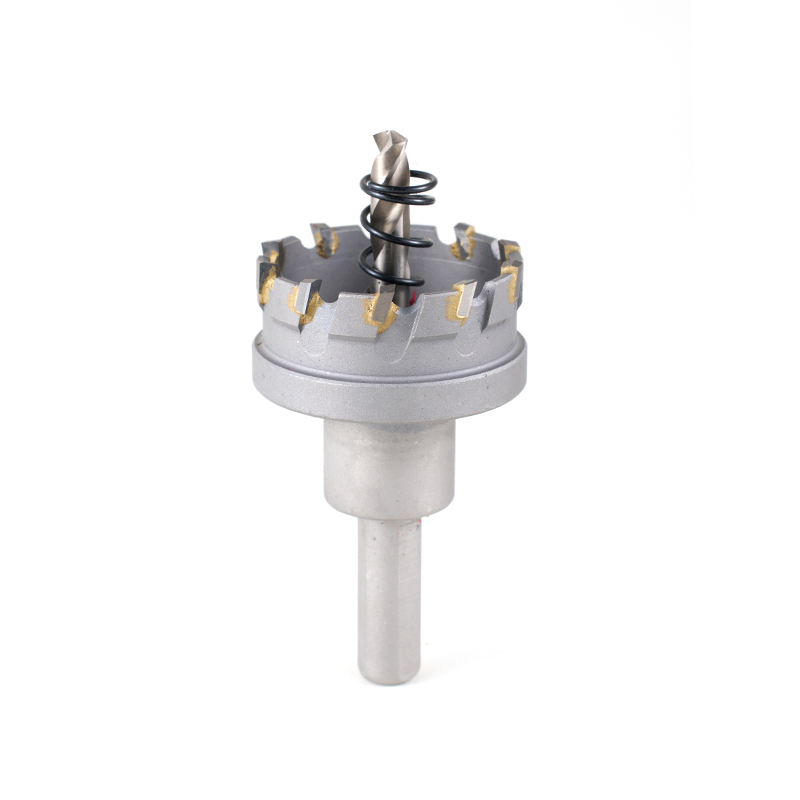
In a professional drill manufacturing factory, material selection is coupled with controlled heat treatment, metallurgical refinement, and precise coating application. These optimizations directly support faster steel drilling by preventing premature edge breakdown and enhancing performance under demanding cutting regimes.
3. Precision Geometry Drives Drilling Performance
Tool geometry—the shape and angles of the drill tip, flutes, and chisel edge—plays a pivotal role in steel drilling optimization:
- Point Angle and Web Thickness: Optimizing point angles reduces axial force and improves centration, enabling faster steel drilling while preserving roundness and hole quality.
- Helix and Flute Design: Aggressive flute geometry ensures smooth chip evacuation, reducing heat buildup and enabling more efficient steel drilling across long hole depths.
- Parabolic Flutes: Some high-performance drills feature parabolic flutes that evacuate chips more effectively than conventional designs, improving chip flow in deep holes.
Advanced geometry is especially critical for drills intended to deliver consistent performance across hard steels and high-speed cutting—which is a key aspect of steel drilling optimization.
4. Cooling and Lubrication: A Core Driver of Efficiency
Heat control is fundamental to achieving faster steel drilling and efficient steel drilling:
- Coolants reduce cutting-zone temperature, protecting drill edges from thermal wear.
- Micro-lubrication (MQL) and internal coolant channels deliver lubricant exactly where needed, reducing friction and improving chip evacuation.
- Chip Control Fluids: Proper fluids help break chips into manageable lengths, avoiding chip packing.
For steel drilling, particularly when aiming for efficient steel drilling at scale, integrated cooling strategies minimize downtime and tool change frequency—a crucial component of steel drilling optimization.
5. Speed, Feed, and Cutting Dynamics
Choosing the right spindle speed and feed rate is central to performance:
- Excessive speed may overheat the bit, reducing tool life.
- Too slow, and productivity suffers.
Through empirical testing and simulation, manufacturers can recommend parameters tailored to material grade, drill geometry, and machine capability—directly contributing to faster steel drilling with reduced wear and improve stability.
In industrial applications, steel drilling optimization often involves real-time monitoring of torque, vibration, and temperature, enabling adaptive control of speeds and feeds to maintain consistent cutting conditions.
6. Precision Tool Holding and Machine Stability
Even drill cannot perform without a stable platform. Steel drilling optimization requires:
- High-precision tool holders (e.g., shrink-fit or hydraulic chucks) to minimize runout.
- Rigid machine frames to resist vibration under load.
- Smooth power delivery from high-torque spindles.
These factors support consistent chip formation and reduce chatter, which are essential to achieving efficient steel drilling and improving tool lifespan.
7. Deep Hole Drilling: Advanced Considerations
Deep hole drilling presents its own set of challenges. Conventional twist drills often falter due to chip accumulation and bending forces. For deep applications, specialized drills use:
- Extended flute length with enhanced chip channels.
- Rigid shank designs to minimize deflection.
- Internal coolant pathways to flush chips far from the cutting edge.
In such scenarios, steel drilling optimization and efficient steel drilling are achieved through integrated tool design that addresses thermal, mechanical, and evacuation challenges simultaneously.

8. Automation and CNC Integration
In modern manufacturing lines, automation plays a key role in enabling faster steel drilling:
- CNC drilling cells allow precise repetition with minimal human error.
- Robotics can handle drill changes and workpiece repositioning.
- Sensors feed real-time data for adaptive control systems that fine-tune drilling parameters.
This synergy between automated systems and drill tooling increases consistency and reduces idle time—key elements of efficient steel drilling and overall steel drilling optimization in high-throughput environments.
9. Tool Life Management and Maintenance
Durability underpins cost efficiency:
- Tracking tool wear helps anticipate replacements before failures.
- Re-sharpening HSS drills prolongs service life, while coated carbide drills deliver extended life out-of-the-box.
- Tool management systems in factories track usage, outcomes, and lifecycle data—feeding back into steel drilling optimization strategies.
Good maintenance practices ensure that tooling investments yield maximal productivity and consistent performance.
10. Application Examples: Real World Gains in Performance
Automotive
In automotive production, where thousands of holes are drilled daily, faster steel drilling translates directly into higher throughput and lower cycle times. Optimized drill geometry and advanced coatings reduce wear and eliminate frequent tool changes.
Heavy Machinery
For thick-section steel components, efficient steel drilling ensures that even deep holes with high aspect ratios remain precise. High-performance drills with internal cooling and parabolic flutes support demanding steel drilling optimization goals.
Precision Manufacturing
In aerospace and precision engineering, steel drilling optimization focuses not just on speed but also on repeatability and dimensional accuracy. Stable machine-tool interfaces and advanced drills deliver minimal deviation in critical features.
11. The Role of Manufacturing Expertise
As a drill tool manufacturer, we integrate comprehensive steel drilling optimization knowledge into product design and production:
- Material science: Selecting steels and carbides with ideal hardness and toughness.
- Geometry engineering: Designing flute, point angles, and clearance for improve chip flow.
- Coating technology: Applying advanced PVD/CVD layers for thermal and wear resistance.
- Quality standards: Ensuring concentricity, hardness, and dimensional precision.
This holistic approach enables end users to achieve faster steel drilling and efficient steel drilling across diverse applications—whether in high-volume factories or specialized workshops.
12. Conclusion: Integrating Tools, Processes, and Technology
Achieving faster steel drilling, efficient steel drilling, and comprehensive steel drilling optimization depends on a combination of tool design, machining strategy, and production control. High-performance tools with optimized geometry, advanced materials, and proper cooling systems increase productivity while minimizing wear and operational costs.
For professional manufacturers aiming to excel in competitive environments, understanding and applying these principles ensures consistent quality, lower cycle times, and reduced tooling costs—a direct competitive advantage in modern steel processing.
Contact Us
Your email address will not be published. Required field are marked*

- Address: No.13, Qiaonan Road, Qingjiang Town Yueqing, Zhejiang, China
- Tel: +86-577-62260222
- FAX: +86-577-62260666
- E-mail: [email protected]
Copyright © Zhejiang Botian Tools Co., Ltd. All rights reserved.

Cutting Tools Manufacturer
