

 English
 русский
 Deutsch
Home · News · Industry News · How to Choose the Right Drill Bit for Your Application?
Industry News
How to Choose the Right Drill Bit for Your Application?
2025-06-24Selecting the right drill bit might seem simple at glance — just match size to hole diameter and go. But in professional machining environments, drill bit choice directly affects cycle time, surface finish, tool life, operational cost, and even worker safety. Whether you are drilling metals, plastics, composites, or ceramics, understanding material characteristics and tooling options is essential.
1. Material Matters: Matching Drill Bit to Workpiece
important factor in drill bit selection is the material you need to pierce. The physical and metallurgical properties of workpieces — hardness, ductility, brittleness — determine which drill bit material and geometry deliver results.
Metals and Alloys
- Carbon Steel, Mild Steel: These common metals can be drilled effectively with general-purpose bits, but performance varies. A Cobalt drill bit provides outstanding heat resistance and durability compared to standard HSS bits. A Carbide drill bit is outstanding when production speed and tool life matter.
- Stainless Steel, Tough Alloys: Materials that strain cutters require more advanced tooling. A Cobalt drill bit with high cobalt content (>5%) maintains hardness at elevated temperatures, while tungsten-based bits like a Tungsten carbide drill bit offer even higher wear resistance and can handle elevated feed rates.
Non-Metal Materials
- Ceramics and Glass: These brittle materials demand tooling unlike metal work. A Ceramic drill or diamond-enhanced variants are ideal for ceramics because they resist heat and fracture under tensile stress. Carbide tools can struggle here due to brittleness at impact points.
- Plastics and Composites: These softer materials may be drilled with HSS or cobalt variants, but care must be taken to avoid heat buildup and melting. Some Carbide drill bit designs with polished flutes work well for plastics by minimizing friction.
2. Drill Bit Material Comparisons: What's for Your Job?
Understanding the intrinsic properties of different drill bit materials helps predict performance and lifespan.
Carbide Drill Bit
A Carbide drill bit is made primarily from tungsten carbide particles bonded together — a material that is harder and more heat-resistant than most steels. These bits excel in high-speed and high-wear applications:
- Outstanding hardness and wear resistance: Ideal for abrasive materials and large production runs.
- Heat tolerance: Maintains cutting edge at elevated temperatures.
- Long tool life: Reduces downtime caused by frequent tool changes.
However, carbide bits are more brittle than steel-based alternatives, so they're used on rigid, well-supported workpieces with stable machine setups.
Cobalt Drill Bit
A Cobalt drill bit uses a high-speed steel base alloyed with cobalt (typically 5–8%). This alloying boosts thermal stability and wear resistance compared to standard HSS bits:
- Versatile in tougher metals: Works well on stainless steel, heat-treated alloys, and cast components.
- Better heat resistance than HSS: Allows higher spindle speeds and reduced dwell time.
- Good balance of toughness and hardness: Less brittle than pure carbide.
Manufacturers prefer cobalt bits when they need enhanced durability without the brittleness of carbide tooling.
Tungsten Carbide Drill Bit
Though often used interchangeably with carbide drill bit, a Tungsten carbide drill bit specifically emphasizes the use of tungsten carbide as the primary cutting material. These bits stand out for:
- Outstanding hardness (often HRA 90+): Drills hardened steels and difficult-to-machine alloys.
- Thermal stability: outstanding for high-production environments with elevated speeds.
- Precision holes: Suitable for tight tolerance drilling in aerospace and automotive parts.
Because tungsten carbide is inherently brittle, it requires stable fixturing and controlled feed rates to avoid chipping.
Ceramic Drill
A Ceramic drill differs significantly from metal-based drills. It is made from advanced ceramic compositions that offer:
- High wear resistance and thermal shock resistance: Works well in high-temperature drilling with reduced heat conduction.
- Non-metal drilling: Useful in cases where metal bits might contaminate the material.
Ceramic drills are more common in non-metal industries (e.g., electronics, medical device prototypes, plastics) and are chosen for precision when specific materials require non-metallic tooling.
3. Geometry and Coatings: Fine-Tuning Performance
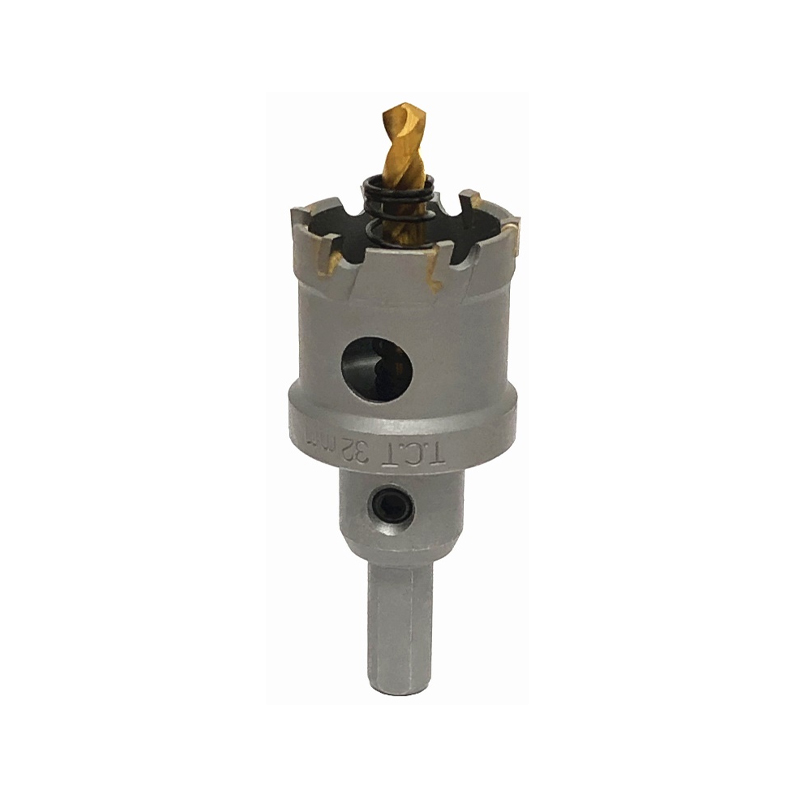
Material alone does not determine performance. Drill bit geometry — including point angle, flute design, and helix angle — plays a decisive role in achieving efficient, clean holes.
- Split-point and parabolic flutes: Aids centration and reduces thrust force.
- Precision ground cutting edges: Improve surface finish and reduce burr formation.
- Coatings (TiN, TiAlN, DLC): Reduce friction and minimize heat buildup — beneficial for Carbide drill bit and Cobalt drill bit applications, particularly in high-speed production environments.
For example, a carbide drill bit optimized with TiAlN coating can operate at higher speeds with serious heat suppression, while a ceramic drill may be designed with smooth flute surfaces to reduce friction on softer materials.
4. Manufacturing Expertise: Why Drill Bit Quality Matters
A professional drill bit manufacturer integrates material science, precision engineering, and quality control to produce bits that not only cut but perform reliably under demanding conditions. Factors include:
- Material purity and bonding: Consistent microstructure in tungsten carbide bits enhances cutting edge stability.
- Heat treatment control: Ensures ideal hardness without sacrificing toughness — vital for both Carbide drill bit and Cobalt drill bit products.
- Dimensional precision: Tight tolerances improve hole accuracy and reduce rework.
- Batch consistency: Uniform performance across large orders ensures predictable results on the production floor.
This depth of expertise is especially important in high-volume environments — for example, aerospace component drilling, automotive assembly, or industrial maintenance tasks — where tool failure is costly.
5. Application-Based Recommendations
Rather than a one-size-fits-all approach, drill bit choice should reflect the specific machining task:
General Workshop and Light Production
For mild metals and general-purpose drilling, a Cobalt drill bit offers a balanced combination of toughness and heat resistance — suitable for moderate volumes and mixed materials.
Heavy-Duty Metalworking
When working with hardened metal, cast iron, or requiring frequent hole cycles, a Carbide drill bit or Tungsten carbide drill bit provides outstanding wear performance and longer life, especially at higher feeds and speeds.
High-Precision Drilling
In precision manufacturing sectors (automotive, aerospace), finely ground tungsten carbide bits ensure dimensional accuracy and consistent finishes — essential for critical tolerances.
Non-Metallic and Abrasive Materials
A Ceramic drill shines when drilling plastics, composites, and some engineered non-metals where metal bits may overheat or contaminate material surfaces.
6. Practical Machining Considerations
When selecting drill bits, also consider operational factors:
- Cutting Speed and Feed: Higher speeds benefit carbide tooling, but require careful cooling and machine stability to prevent chatter and breakage.
- Coolant and Lubrication: Especially for metal drilling with cobalt and carbide bits, adequate cooling reduces tool wear.
- Tool Holding and Runout: Proper chucks and holders minimize deviation and ensure holes are straight and precise.
These machining considerations are integral to drill bit selection and directly impact productivity and part quality.
7. Case Studies: Real-World Manufacturing Success
Automotive Stamping Plant
An automotive press line switched from standard HSS bits to a mix of Cobalt drill bit and Tungsten carbide drill bit tooling for holemaking in hardened frames. The result: 30% longer tool life and reduced unplanned downtime.
Industrial Equipment Fabrication
A factory producing heavy equipment used specialized Carbide drill bit designs with advanced coatings. High-volume drilling in alloy steels saw significantly improved throughput and surface quality, reducing post-process deburring.
Prototype Electronics
A precision electronics supplier adopted Ceramic drill tooling for polymer components. The ceramic material's low heat conduction prevented part deformation during drilling — a key advantage over metal tooling.
8. Re-Sharpening and Tool Life Management
- Cobalt drill bits and HSS derivatives are easier to re-sharpen than carbide tooling, enabling extended life with controlled re-sharpening cycles.
- Carbide drill bit and Tungsten carbide drill bit products generally deliver longer in-service life but require specialized equipment for re-sharpening.
- Ceramic drill tooling may be a consumable in certain applications depending on workload and material hardness.
A manufacturing factory often partners with users to provide re-sharpening services or guidance, ensuring tooling retains good performance over time.
9. Cost-Benefit Analysis
While premium tooling like Tungsten carbide drill bit and coated Carbide drill bit may have higher upfront cost, optimized performance, reduced downtime, and improved quality often justify the investment. Conversely, for low-volume or soft materials, more economical bits — including Cobalt drill bit — balance performance with cost.
10. Summary: Balancing Performance, Material, and Cost
Choosing the right drill bit is not just about the size of the hole — it is a strategic decision that influences machining efficiency, part quality, and operational costs. By matching workpiece material with the strengths of Carbide drill bit, Cobalt drill bit, Tungsten carbide drill bit, or Ceramic drill, manufacturers achieve better outcomes:
- Carbide options improve wear resistance and high-speed performance.
- Cobalt blends extend tool life in tough materials.
- Tungsten carbide bits deliver precision and outstanding hardness.
- Ceramic drills offer niche advantages in specific non-metal applications.
By leveraging advanced manufacturing processes, comprehensive quality control, and material science expertise, drill bit producers deliver optimized tools that meet the diverse needs of modern industrial applications.
Contact Us
Your email address will not be published. Required field are marked*

- Address: No.13, Qiaonan Road, Qingjiang Town Yueqing, Zhejiang, China
- Tel: +86-577-62260222
- FAX: +86-577-62260666
- E-mail: [email protected]
Copyright © Zhejiang Botian Tools Co., Ltd. All rights reserved.

Cutting Tools Manufacturer
