

 English
 русский
 Deutsch
Home · News · Industry News · How Wholesale Drywall Screw Setters Improve Construction Fastening Efficiency
Industry News
How Wholesale Drywall Screw Setters Improve Construction Fastening Efficiency
2026-05-08Role Of Wholesale Drywall Screw Setters In Modern Construction Fastening Tasks
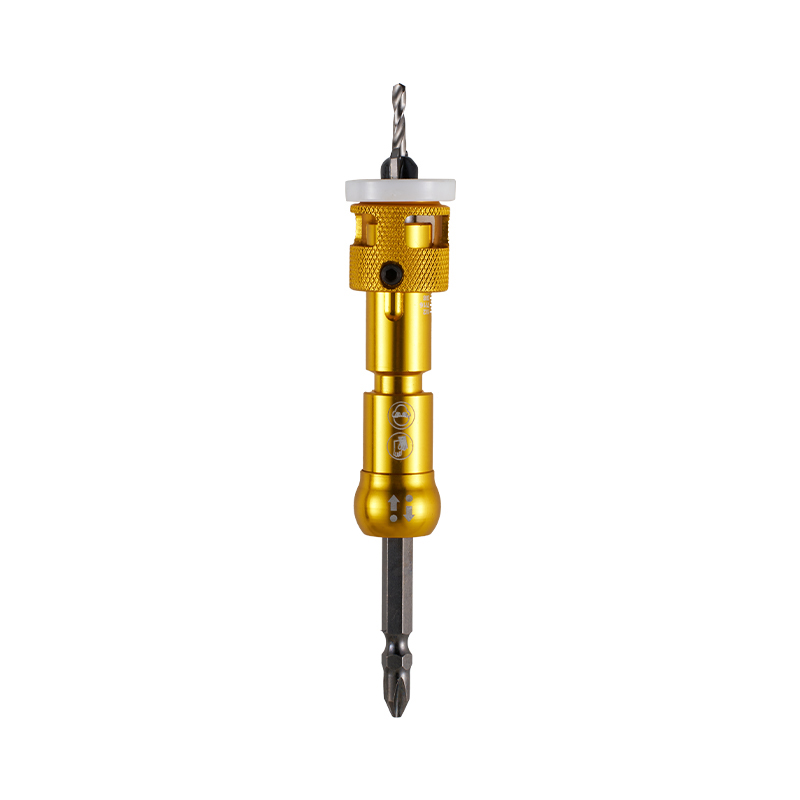
On many building sites, fastening work often looks simple at first glance, but in practice it is one of the steps that needs steady control. Wholesale Drywall Screw Setters are commonly used when boards and panels need to be fixed repeatedly across wide surfaces.
What makes them practical is not a single feature, but the way they help keep each screw placed in a similar position and depth. When this part is not consistent, the surface often feels uneven later on, even if the structure underneath is stable.
In discussions related to general tool systems, Countersink Drill Bits Factory is sometimes mentioned because drilling and fastening usually work as a connected sequence rather than separate actions.
In daily use, screw setting tools are often involved in:
- Repeated fixing of screws across flat board surfaces
- Keeping screw depth from changing too much between points
- Supporting alignment between panels and supporting frames
- Reducing uneven marks after installation
- Helping workers maintain a steady working rhythm
They sit quietly in the workflow, but the effect becomes clear when the surface is checked afterward.
Working Principle Of Drywall Screw Setting Tools In Assembly Operations
Drywall screw setting tools work through a controlled driving motion. Instead of relying only on how the user presses the tool, the structure itself helps guide the screw into the material with a certain limit.
This matters because board materials do not respond the same way as solid metal or dense blocks. Small changes in pressure can slightly change how deep a screw goes, and over many points, that difference becomes visible.
A typical working sequence usually feels like this:
- Positioning the screw at the contact point
- Applying steady pressure while rotating
- Allowing the screw to enter the surface gradually
- Stopping when the depth feels aligned with the surface
- Moving on to the next fastening point
This cycle repeats many times during one installation task, especially when working on larger wall areas.
Connection Between Countersink Drill Bits Factory And Fastening Tool Production
Countersink Drill Bits Factory production is often linked with fastening systems because drilling and screw placement are usually part of the same workflow. One prepares the surface, the other completes the fixing.
Countersink drill bits are used to shape the entry area so that screw heads can sit closer to the surface line. Without this step, the screw head may sit unevenly, which can affect the final finish.
In practical construction flow, the connection looks like this:
- Drill bits create a controlled entry point
- Countersink shaping adjusts space for screw heads
- Screw setters complete the fastening process
- Both steps support a smoother surface result
- Work efficiency depends on how well the tools match
Rather than separate tools doing separate jobs, they behave more like linked steps in one continuous process.
Structural Design Differences In Drywall Screw Setters And Standard Fastening Tools
Drywall screw setting tools are designed with surface consistency in mind. They are not only meant to drive screws in, but also to keep the surface appearance controlled after installation.
Compared with general fastening tools, the differences are usually seen in how they handle depth and alignment during repeated use.
Common structural points include:
- Built-in control for screw depth consistency
- Contact design that reduces surface damage
- Alignment support for flat panel installation
- Stability during repeated fastening cycles
- Simple adjustment behavior during continuous work
These design choices make them more suitable for surface-based construction tasks where visual and structural consistency both matter.
Material Selection In Countersink Drill Bits Factory Production
Inside Countersink Drill Bits Factory production, material choice plays a quiet but important role in how the tool behaves during use. Drill bits are exposed to constant rotation and pressure, often under changing surface resistance.
Because of this, the material needs to stay stable over repeated cycles without losing its cutting behavior too quickly.
Typical material considerations include:
- Resistance to gradual surface wear
- Stability under continuous rotation
- Balanced hardness for controlled cutting
- Response to heat created during use
- Consistency across multiple drilling cycles
When material behavior remains stable, the drilling step becomes more predictable, which helps the fastening stage that follows.
Efficiency Factors In Construction Fastening Work Using Drywall Screw Setters
Efficiency in fastening work is not only about moving faster. It is more about reducing small interruptions that break the flow of work. Wholesale Drywall Screw Setters support this by helping each fastening point stay closer to the same depth and alignment.
When that consistency is maintained, less correction is needed afterward, which keeps the workflow smoother.
In real working conditions, efficiency often comes from:
- Fewer adjustments after screw placement
- More consistent depth across surfaces
- Smoother movement between fastening points
- Less interruption during continuous installation
- More stable tool response over repeated use
Over time, these small differences add up across larger surface areas.
| Stage | Tool Role | Main Function | Effect On Surface |
|---|---|---|---|
| Entry preparation | Drill bit | Creates initial hole | Defines screw path |
| Surface shaping | Countersink bit | Adjusts head space | Reduces uneven height |
| Fastening | Screw setter | Fixes screw position | Stabilizes panel |
| Alignment flow | Combined process | Step coordination | Smoother finish line |
Operational Behavior Of Wholesale Drywall Screw Setters In Large Scale Work
In continuous construction work, screw setting is rarely a single action. It is a repeated pattern that extends across long surfaces. Because of this, the tool behavior becomes noticeable over time rather than in a single use.
Workers often develop a steady rhythm, moving from one point to another with similar hand motion and pressure control.
Common usage patterns include:
- Repeated fastening along extended surface lines
- Small adjustments based on material response
- Consistent movement between installation points
- Gradual adaptation to surface resistance changes
- Focus on maintaining even spacing and depth
This repetition is where tool stability becomes more important than individual speed.
Surface Finishing Quality In Drywall Fastening Applications
After screws are placed, the condition of the surface becomes more noticeable than the fastening itself. In drywall work, even small differences in screw depth can change how smooth the final surface feels.
Wholesale Drywall Screw Setters are often used to reduce these differences. By keeping the screw head closer to a consistent level, the surface needs less adjustment later.
In practical work, surface finishing is usually influenced by:
- How evenly screws sit within the board surface
- Whether pressure was stable during fastening
- Small variations between repeated screw points
- Interaction between board material and screw depth
- The alignment between adjacent fastening positions
When these factors stay relatively stable, the surface tends to require fewer corrections during later stages of work.
Maintenance And Wear Behavior Of Fastening Tool Systems
Like most tools used repeatedly on construction sites, drywall screw setting tools gradually change in behavior over time. It is not an immediate shift, but a slow adjustment caused by repeated pressure and rotation.
The same applies to drilling components connected with Countersink Drill Bits Factory production. Drill bits experience contact with different surface densities, which affects their cutting feel over long use periods.
Common maintenance-related observations include:
- Gradual change in fastening smoothness
- Slight variation in screw depth control over time
- Wear on contact areas between tool and material
- Reduced sharpness in drilling performance after repeated use
- Need for periodic cleaning to maintain stability
These changes do not stop usage immediately, but they can affect consistency if not addressed.
Safety And Handling Stability In Construction Fastening Systems
Safety in fastening work is closely related to how stable the tool feels during repeated operation. Drywall screw setting tools are designed to reduce sudden movement during fastening, especially when working on large vertical or overhead surfaces.
When handling is stable, users are less likely to over-press or misalign the screw position. This helps maintain both safety and surface quality at the same time.
In practice, safety considerations often include:
- Stable grip during continuous fastening movement
- Controlled pressure to avoid surface damage
- Reduced slipping during tool rotation
- Consistent alignment with screw entry points
- Better control during extended working periods
These factors become more noticeable when work is performed over long surface sections.
Coordination Between Drill Bits And Screw Setting Tools In Practice
Drilling and fastening are often treated as two separate steps, but in real construction work they are closely connected. Countersink Drill Bits Factory output supports the preparation stage, while screw setters complete the fixing stage.
When both tools work in sequence, the result depends on how smoothly one step transitions into the next.
In practical workflow terms:
- Drill bits create a controlled entry path
- Countersink shaping prepares space for screw heads
- Screw setters complete tightening and fixing
- Surface alignment is influenced by both steps together
- Interruptions between steps can affect finishing consistency
When this sequence is smooth, the surface tends to look more even without additional adjustment.
Development Direction Of Countersink Drill Bits Factory And Fastening Tools Industry
The direction of tool development in this area has gradually shifted toward smoother coordination between drilling and fastening processes. Instead of treating each tool separately, more attention is given to how they function together in real work conditions.
Some ongoing tendencies include:
- Better alignment between drill bit shaping and screw seating
- More stable performance across repeated use cycles
- Simpler tool structures for easier handling
- Improved consistency in surface finishing results
- Gradual reduction of unnecessary adjustment steps during work
Wholesale Drywall Screw Setters and drilling components continue to evolve around the same practical goal: making repeated fastening work more stable and less dependent on manual correction.
In real construction environments, fastening efficiency is rarely about a single action. It comes from how drilling, shaping, and screw placement connect with each other across repeated work.
When each step stays consistent, the overall process becomes easier to manage, and surface results tend to remain more even without extra effort.
Contact Us
Your email address will not be published. Required field are marked*

- Address: No.13, Qiaonan Road, Qingjiang Town Yueqing, Zhejiang, China
- Tel: +86-577-62260222
- FAX: +86-577-62260666
- E-mail: [email protected]
Copyright © Zhejiang Botian Tools Co., Ltd. All rights reserved.

Cutting Tools Manufacturer
