

 English
 русский
 Deutsch
Home · News · Industry News · Hole Saw Blades Cutter Drill Bit Jams Before the Teeth Dull
Industry News
Hole Saw Blades Cutter Drill Bit Jams Before the Teeth Dull
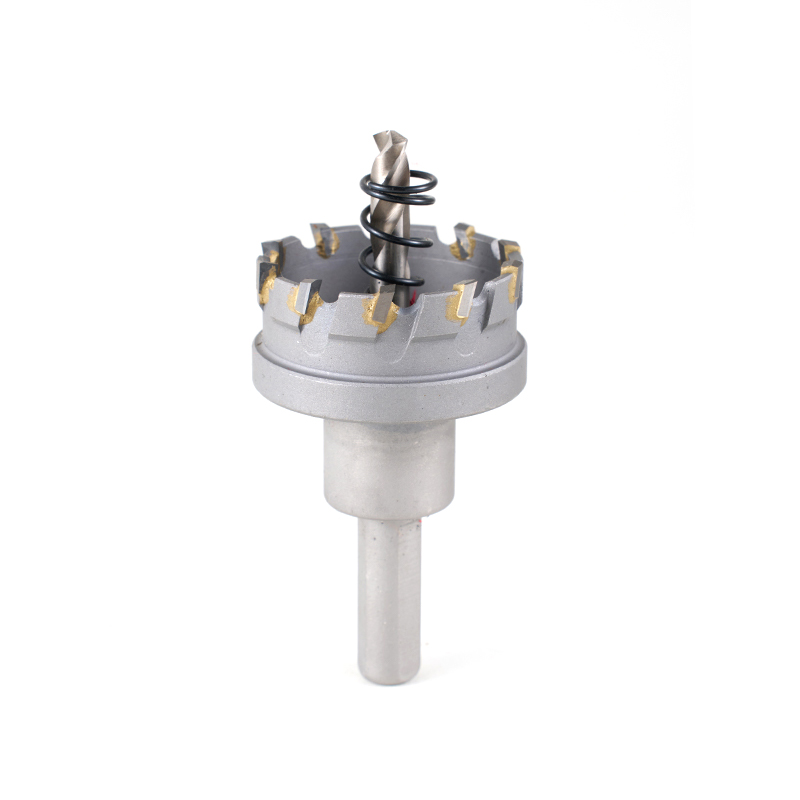
2026-07-24A hole saw blades cutter drill bit is bought for versatility: it drills the pilot hole and cuts the main opening in one operation. The tool arrives with a sharp pilot bit and a well-aligned hole saw. After a dozen uses, the same tool binds in the workpiece. The pilot bit still cuts. The saw teeth still look sharp. But the alignment between the two has shifted, and the tool no longer tracks straight. The hole saw blades cutter drill bit that cannot maintain concentricity produces oval holes and stuck tools, and the operator replaces it while both cutting edges still have life remaining. The pilot and the saw fail together because the alignment between them fails first.
Pilot Bit Runout Pulls the Saw Off-Center
The pilot bit guides the hole saw into the workpiece. If the pilot bit wobbles, the saw follows the wobble. A hole saw blades cutter drill bit with excessive runout at the pilot bit cuts an oversized starter hole. The saw enters at an angle. The teeth bind against one side of the cut. The binding creates heat. The heat softens the material and gums the teeth. The operator assumes the teeth are dull. The teeth are fine. The pilot bit simply does not point straight.
- Pilot bit concentricity determines whether the saw tracks straight through the entire cut
- Shank straightness determines whether the entire assembly rotates without wobble
- Arbor thread quality determines whether the saw screws on squarely or at a slight tilt
A hole saw blades cutter drill bit manufacturer that controls all three variables ships tools that cut clean, round holes every time. One that allows runout at any point ships tools that bind and overheat, and the operator blames the teeth for a problem that started at the pilot.
Chip Evacuation Clogs the Cut Before Teeth Wear
The hole saw cuts an annular groove. The groove fills with sawdust. A hole saw blades cutter drill bit with insufficient chip clearance packs the groove tight. The packed sawdust creates friction. The friction heats the teeth. The teeth lose their temper. The operator sees heat discoloration and assumes the teeth wore out. The teeth wore because the chips could not escape. Two design features determine whether chips clear properly:
- Gullet depth between the teeth, because deeper gullets hold more sawdust before packing
- Slots or holes in the saw body, because these allow chips to exit the cut rather than recirculate
A hole saw blades cutter drill bit manufacturer that optimises chip clearance ships tools that cut cool and clean. One that prioritises tooth count over gullet depth ships tools that clog and overheat.
The Pilot Bit Snaps First Under Side Load
The pilot bit is thin. It drills the initial hole and then bears the side load of keeping the saw aligned. A hole saw blades cutter drill bit that encounters a knot or a hidden fastener subjects the pilot bit to bending force. The pilot bit snaps. The saw loses its guide. The tool becomes useless while the saw teeth and the remaining pilot bit stub still cut perfectly.
- Three Signs Tell the Operator the Pilot Bit Is Failing Before It Snaps
- Check the pilot bit tip for any bending or deformation visible to the naked eye
- Feel for vibration during the first quarter-inch of drilling, which indicates the pilot is already off-center
- Inspect the starter hole for elongation or oval shape, which means the pilot is wobbling
A hole saw blades cutter drill bit user who watches for these three signs catches pilot failure before the bit snaps. One who ignores them finishes the hole with a broken pilot and a damaged saw.
Arbor Connection Loosens and Creates Wobble
The hole saw screws onto the arbor. Vibration from cutting loosens the threads. A hole saw blades cutter drill bit with a loose connection wobbles during rotation. The wobble creates oversized holes and binds the saw. The operator stops frequently to retighten. The retightening wears the threads. The worn threads never hold tight again. The tool becomes scrap while the teeth remain perfectly capable of cutting.
The Alignment Fails Before Either Cutting Edge Wears
The hole saw blades cutter drill bit combines two cutting tools. The pilot drills first. The saw follows. If they stay aligned, both cut efficiently. If they drift apart, neither works well. Manufacturers who focus on tooth hardness or pilot sharpness while ignoring the connection between them produce tools that fail from misalignment. Manufacturers who treat concentricity as the primary specification produce tools that cut straight until the teeth finally dull. The contractor notices the difference not in the first hole, but in the tenth. The well-aligned tool still cuts. The misaligned tool binds, heats, and gets replaced while sharp edges go to waste.
Contact Us
Your email address will not be published. Required field are marked*

- Address: No.13, Qiaonan Road, Qingjiang Town Yueqing, Zhejiang, China
- Tel: +86-577-62260222
- FAX: +86-577-62260666
- E-mail: [email protected]
Copyright © Zhejiang Botian Tools Co., Ltd. All rights reserved.

Cutting Tools Manufacturer
