

 English
 русский
 Deutsch
Home · News · Industry News · Hex Shank Thin Wall Hole Saw Strips at the Drive Flats Before the Teeth Dull
Industry News
Hex Shank Thin Wall Hole Saw Strips at the Drive Flats Before the Teeth Dull
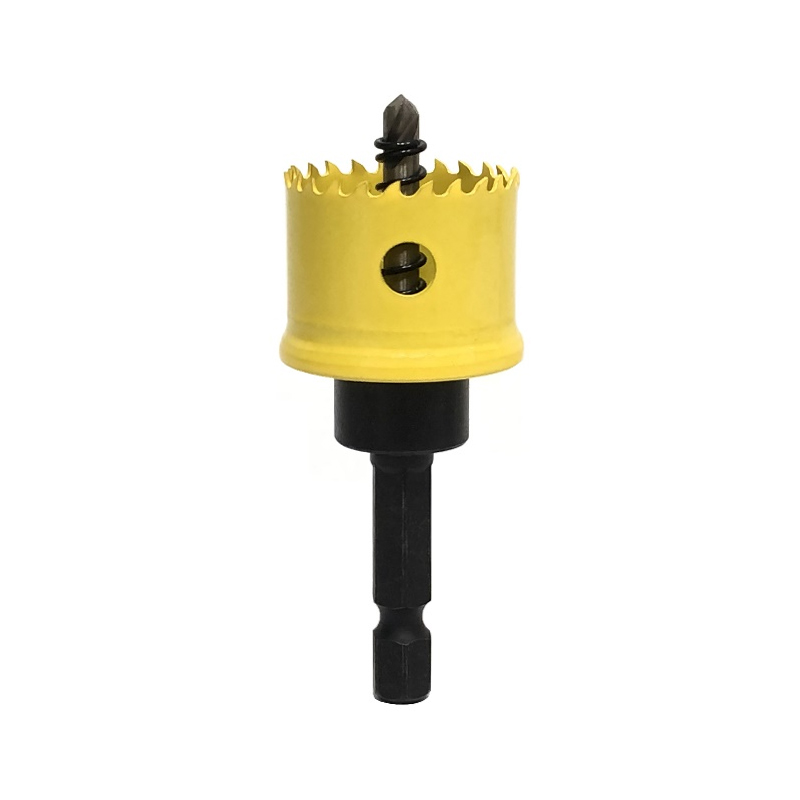
2026-07-17A hex shank thin wall hole saw is bought for two reasons: the hex drive prevents slipping in the chuck, and the thin wall reduces cutting resistance in soft materials. Electricians and plumbers use it for cutting holes in drywall, plaster, and thin paneling. The tool arrives with sharp teeth and a perfectly formed hex shank. After a dozen holes, the same saw spins freely in the drill chuck. The hex flats have rounded off. The teeth still cut. The thin wall still reduces friction. But the drive connection no longer transfers torque from the drill to the saw. The hex shank thin wall hole saw that cannot maintain its drive geometry becomes useless while the cutting edge remains sharp enough for dozens more holes. The shank fails before the teeth wear.
Shank Hardness Determines How Long the Hex Flats Last
The hex shank transfers torque through six flat surfaces. Each flat contacts the chuck jaw. Under load, the chuck jaws press against the flats and rotate the saw. If the shank is too soft, the flats deform. The deformation creates rounded corners. The chuck loses grip. A hex shank thin wall hole saw with a properly hardened shank holds its hex geometry through hundreds of holes. One with a shank that was not heat-treated to sufficient hardness rounds off after a few uses.
Three factors determine whether the hex flats hold their shape through the tool's cutting life:
- Shank material composition, because certain steel alloys respond better to heat treatment than others
- Heat treatment temperature and duration, because under-hardening leaves the steel soft while over-hardening makes it brittle
- Case depth of hardening, because surface hardening that penetrates only a few thousandths of an inch wears through quickly
A hex shank thin wall hole saw manufacturer that controls all three variables ships tools that stay locked in the chuck until the teeth finally dull. One that skips hardness testing ships tools that spin in the chuck while the teeth still cut perfectly.
Chuck Jaw Wear Mirrors Shank Wear
The drill chuck jaws also wear. A hex shank thin wall hole saw that rounds off its flats damages the chuck jaws in the process. The operator installs a new saw. The damaged jaws no longer grip the new hex shank properly. The operator blames the new saw. The problem lives in the chuck. Operators who check chuck jaw condition regularly avoid this trap. Those who assume every slipping saw is a defective tool replace tools that were still functional.
Thin Wall Design Reduces Cutting Resistance but Increases Shank Stress
The thin wall cuts through material with less friction. Less friction means less resistance. Less resistance means the drill spins faster with less load. But the thin wall also means less structural support for the shank connection. A hex shank thin wall hole saw that encounters a nail or screw in the material experiences a sudden torque spike. The spike transfers directly to the hex shank. The soft shank deforms instantly. The wall may stay intact. The teeth may survive. The shank rounds off, and the tool becomes a paperweight.
Three Quick Checks Identify Shank Wear Before It Fails Completely
- Inspect the hex flats for visible rounding or shiny wear marks that indicate deformation
- Insert the shank into the chuck and tighten firmly, then try to rotate the saw by hand against the chuck grip
- Listen for clicking or slipping sounds during the first few seconds of drilling, which signal that the shank has already started to deform
A hex shank thin wall hole saw user who performs these three checks before starting a job catches shank wear early. One who ignores them discovers the problem when the saw stops cutting halfway through the hole.
The Hex Shank Fails While the Teeth Stay Sharp
Contractors expect a hole saw to dull before it breaks. A hex shank thin wall hole saw that loses its drive grip while the teeth still cut creates confusion. The operator checks the teeth. They look fine. The operator checks the material. It is drywall, not steel. The operator installs a new saw and continues. The rounded shank goes into the scrap bin with sharp teeth and a lifetime of cutting still in them. The hex shank thin wall hole saw that sacrifices shank quality to save cost ships a tool that fails at the connection, and the connection is the only thing that makes it a hex shank tool in the first place.
Contact Us
Your email address will not be published. Required field are marked*

- Address: No.13, Qiaonan Road, Qingjiang Town Yueqing, Zhejiang, China
- Tel: +86-577-62260222
- FAX: +86-577-62260666
- E-mail: [email protected]
Copyright © Zhejiang Botian Tools Co., Ltd. All rights reserved.

Cutting Tools Manufacturer
