

 English
 русский
 Deutsch
Home · News · Industry News · Woodworking Hole Saws Factory Sees More Returns From Weld Failures Than Tooth Wear
Industry News
Woodworking Hole Saws Factory Sees More Returns From Weld Failures Than Tooth Wear
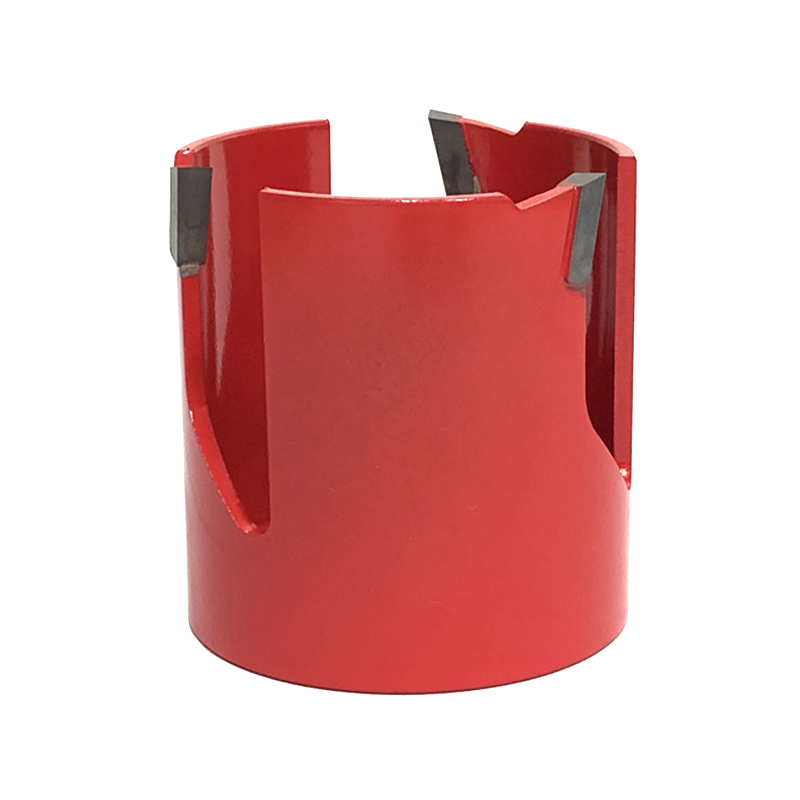
2026-07-10A woodworking hole saws factory produces cylindrical cutting tools that bore clean holes through wood, plywood, and composite panels. These tools arrive on job sites with sharp teeth and smooth cutting action. After a few dozen holes, the same hole saws stop cutting cleanly. The teeth remain sharp. The arbor still fits. But the welded seam between the cutting rim and the back plate has split. The woodworking hole saws factory that cannot produce reliable weld joints ships tools that fail before the teeth lose their edge, and contractors return them while the carbide tips still have months of life remaining. The weld fails before the teeth wear.
Welding Depth Variation Creates Inconsistent Joint Strength
The hole saw consists of a cylindrical cutting rim welded to a flat back plate. The weld must penetrate through the entire thickness of the rim and into the back plate. A woodworking hole saws factory with inconsistent welding parameters produces some joints with full penetration and others with shallow surface welds. The shallow welds hold during light use. Under the torque of drilling a 4-inch hole through hardwood, the shallow weld tears open. The rim separates from the back plate. The saw becomes useless while the teeth remain perfectly sharp. Weld current, duration, electrode pressure, and cooling rate determine joint integrity. A woodworking hole saws factory that monitors all four variables produces welds that outlast the teeth. One that treats welding as a simple operation ships tools that fail at the joint.
Weld Porosity Creates Invisible Weak Points
Porosity forms when gas becomes trapped inside the molten weld metal. The gas creates small voids that reduce the cross-sectional area of the joint. A woodworking hole saws factory producing weld joints with porosity creates tools that pass visual inspection but fail under load. The contractor cannot see the voids. The first few cuts go smoothly. Then the joint tears at the void locations.
The weld station operator checks for porosity by sectioning sample joints and examining the cut surface under magnification. A factory that performs this check on every shift catches porosity problems before production scales. One that skips it discovers the issue only when returned tools pile up at the loading dock.
Back Plate Flatness Determines Whether the Saw Runs True
The back plate attaches to the drill arbor. If the plate is not flat, the saw wobbles during rotation. The wobble creates uneven cutting pressure. The teeth on one side cut deeper. The teeth on the opposite side barely touch the wood. The uneven load stresses the weld joint on the heavy-cutting side. A woodworking hole saws factory that stamps back plates from rolled steel must flatten them after stamping. Residual stress from the stamping process causes the plate to bow. The bow creates runout that kills the weld joint before the teeth show any wear.
A factory that stress-relieves stamped plates before welding ships tools that run true. A factory that welds as-stamped plates ships tools that vibrate and fail.
Common inspection points that separate reliable hole saws from early failures:
- Measure runout at the cutting rim with a dial indicator while the saw spins on a test arbor
- Check back plate flatness on a granite surface plate with a feeler gauge under the edges
- Test weld integrity by applying gradual torque to the joint and recording the failure point
A woodworking hole saws factory that performs these three checks on every batch ships tools that contractors keep in their kit. One that skips them ships tools that end up in the scrap bin with sharp teeth and broken welds.
Carbide Tip Brazing Fails at the Same Temperature as the Weld
The cutting teeth are brazed onto the rim. The brazing alloy melts at a specific temperature. The welding operation generates heat near the braze joint. A woodworking hole saws factory that welds too close to the brazed teeth re-melts the braze alloy. The teeth shift or fall off. The contractor sees missing carbide tips and assumes the brazing process was faulty. The brazing was fine. The welding heat destroyed it. Factories that sequence the operations correctly—braze first, weld second, with cooling between—preserve both joints. Those that try to combine operations save time and lose tools.
The Weld Fails Before the Teeth, Every Time
Contractors judge a hole saw by how long it cuts. They expect the teeth to dull first. The woodworking hole saws factory that delivers tools with dull teeth after fifty holes has a tooth quality problem. The factory that delivers tools with intact teeth and split welds after twenty holes has a weld quality problem. The second problem is more expensive because the contractor returns the tool while the carbide still cuts. Returns cost shipping, handling, and reputation. The weld station costs less to fix than the returns it generates, but only if the factory treats the weld as the critical component rather than an afterthought to the teeth.
Contact Us
Your email address will not be published. Required field are marked*

- Address: No.13, Qiaonan Road, Qingjiang Town Yueqing, Zhejiang, China
- Tel: +86-577-62260222
- FAX: +86-577-62260666
- E-mail: [email protected]
Copyright © Zhejiang Botian Tools Co., Ltd. All rights reserved.

Cutting Tools Manufacturer
