

 English
 русский
 Deutsch
Home · News · Industry News · Adjustable Limit Countersink Drill Bit: The Bit That Stops at the Right Depth
Industry News
Adjustable Limit Countersink Drill Bit: The Bit That Stops at the Right Depth
2026-09-18A countersink bit cuts a cone-shaped recess so a screw head sits flush or below the surface. The problem is depth. Drill too deep and the screw sinks too far. Drill too shallow and the head sticks out. An adjustable limit countersink drill bit solves this with a depth stop that the user sets to the exact recess depth. The bit drills the pilot hole and cuts the countersink in one pass, and the stop keeps the depth consistent from the first hole to the last. For cabinetmakers, furniture builders, and anyone driving a row of screws, the adjustable stop is the difference between a clean job and a rework.
The Stop That Sets the Depth
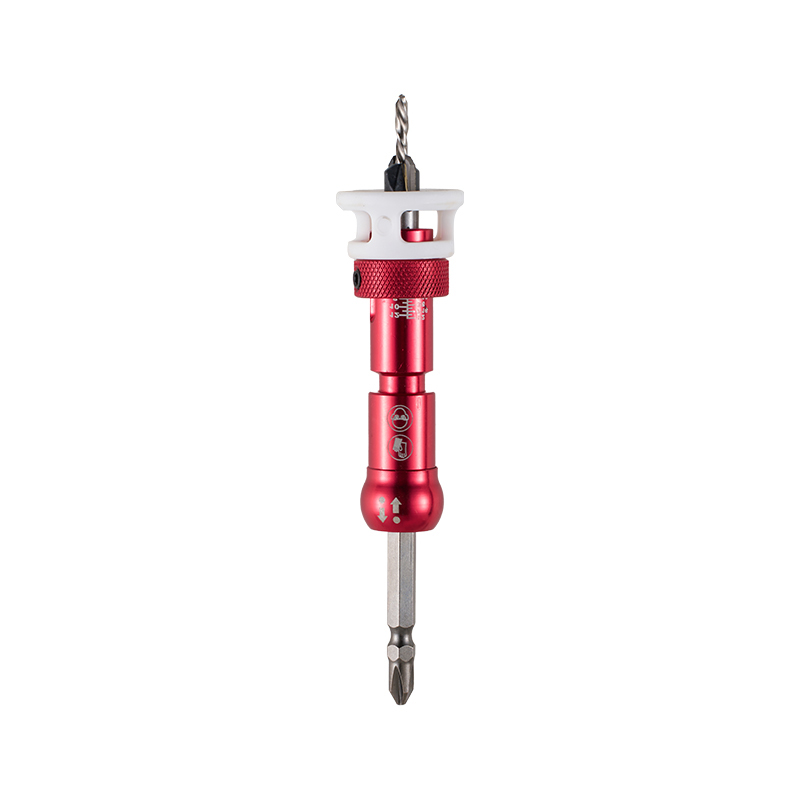
The stop is a collar or a sleeve that sits on the drill bit. It slides along the bit and locks in place. When the bit reaches the set depth, the collar contacts the surface and the bit stops cutting. An adjustable limit countersink drill bit with a properly locking collar holds the setting through the run.
The adjustment is the point. The user loosens the collar, slides it to the depth, and locks it. The depth can be set for the thin stock or the thick, for the shallow countersink or the deep. An adjustable limit countersink drill bit with a smooth adjustment lets the user dial the depth fast.
The lock has to hold. A collar that slips mid-run changes the depth and the screws come out wrong. An adjustable limit countersink drill bit with a set screw, a cam lock, or a hex clamp holds the collar where it is put.
The Pilot and the Countersink Cone
The bit has two parts in one. The pilot drill extends from the center of the countersink cone. The pilot bores the hole for the screw shank. The cone cuts the recess for the screw head. An adjustable limit countersink drill bit with a properly ground pilot and cone does both jobs in one pass.
The pilot is centered. An off-center pilot makes the hole wander and the countersink come out off-center. An adjustable limit countersink drill bit with the pilot properly centered drills the hole and the recess in the same line.
The cone angle matches the screw head. Standard flat-head screws use 82 or 90 degrees. An adjustable limit countersink drill bit with the right cone angle for the screws the user is driving makes the head sit flush.
The Hex Shank and the Material
The shank is hex, so the chuck holds it without slipping. A round shank spins in the chuck under the cutting load. An adjustable limit countersink drill bit with a hex shank transfers the torque to the cutting edges.
The bit material is high-speed steel or carbide-tipped. HSS handles wood, plastic, and the occasional soft metal. Carbide handles the abrasive materials and the production runs. An adjustable limit countersink drill bit with the right material for the work holds the edge.
The cone has multiple flutes. The flutes cut the recess and clear the chips. A cone with three or four flutes cuts smooth and does not chatter. An adjustable limit countersink drill bit with properly ground flutes leaves a clean recess.
Here is what an adjustable limit countersink drill bit needs to deliver:
- Depth stop collar that locks and holds
- Smooth depth adjustment
- Centered pilot drill
- Cone angle matched to the screw head
- Hex shank for positive chuck grip
- Flutes that cut clean and clear chips
The Cabinet Shop and the Deck
The cabinetmaker uses the bit for the face frames and the hardware. Every screw head has to sit the same depth. An adjustable limit countersink drill bit set once and locked gives the same recess on every hole.
The deck builder uses the bit for the deck boards. The screws go in the field of the board, and the heads have to sink below the surface. An adjustable limit countersink drill bit on the deck keeps the heads where they should be.
The furniture builder uses the bit for the assembled pieces. The screw heads are visible, and the recess has to be clean. An adjustable limit countersink drill bit with the right cone angle leaves the clean cone.
The Collar That Slips
The collar slips because the lock was not strong enough. The depth changes mid-run. An adjustable limit countersink drill bit with a proper lock holds. The pilot walks because the tip was not sharp or the bit was not centered. A sharp, centered pilot fixes it. The cone chatters because the flutes were not balanced. A properly ground cone cuts smooth.
An adjustable limit countersink drill bit is the tool that puts the screw head where it belongs. The pilot drills. The cone cuts. The stop controls the depth. Choose a bit with a locking collar that holds, a centered pilot, and the right cone angle. The screws will sit flush and the row will look clean. That is the point. That is what the adjustable bit is for.
Contact Us
Your email address will not be published. Required field are marked*

- Address: No.13, Qiaonan Road, Qingjiang Town Yueqing, Zhejiang, China
- Tel: +86-577-62260222
- FAX: +86-577-62260666
- E-mail: [email protected]
Copyright © Zhejiang Botian Tools Co., Ltd. All rights reserved.

Cutting Tools Manufacturer
