

 English
 русский
 Deutsch
Home · News · Industry News · Thin Wall Hole Saw Drill Bit: The Cutter That Makes Clean Holes in Thin Material
Industry News
Thin Wall Hole Saw Drill Bit: The Cutter That Makes Clean Holes in Thin Material
2026-10-02A standard hole saw is thick, with a heavy body and aggressive teeth. It cuts through doors, pipes, and framing. A thin wall hole saw drill bit is the opposite. The wall of the saw body is thin, the teeth are fine, and the cut is clean. It is built for thin materials: sheet metal, plastic panels, plywood, drywall, fiberglass. A thin wall hole saw makes a hole with less tearing, less heat, and less pressure. For electricians, HVAC installers, and anyone cutting a clean hole in a thin sheet, the thin wall hole saw is the cutter that does not rip the material.
The Thin Wall That Cuts Clean
The wall thickness is the defining feature. A thin wall has less material in contact with the cut, so the saw generates less friction and less heat. Less heat means the material does not melt or burn. A thin wall hole saw drill bit with a properly thin wall cuts the hole without discoloring the edge.
The thin wall also makes a smaller kerf. The saw removes less material, so it cuts faster and uses less power. A thin wall hole saw drill bit with a narrow kerf drills the hole quicker than a standard saw of the same diameter.
The trade-off is strength. A thin wall saw is not for the deep cuts or the heavy material. It flexes under the load if it is pushed. A thin wall hole saw drill bit is for the sheet and the panel, not the beam.
The Teeth That Cut Without Tearing
The teeth are fine, closely spaced, and lightly set. They shear the material instead of ripping it. A thin wall hole saw drill bit with properly formed fine teeth leaves the clean edge in the sheet metal and the plywood.
The tooth set is shallow. The teeth are offset just enough to clear the saw body without creating the wide kerf. A thin wall hole saw drill bit with a shallow set cuts the clean line without the chipping.
The tooth material matches the work. High-speed steel for the wood and the plastic. Bi-metal with cobalt or carbide for the sheet metal and the stainless. A thin wall hole saw drill bit with the right teeth for the material holds the edge.
The Pilot and the Arbor
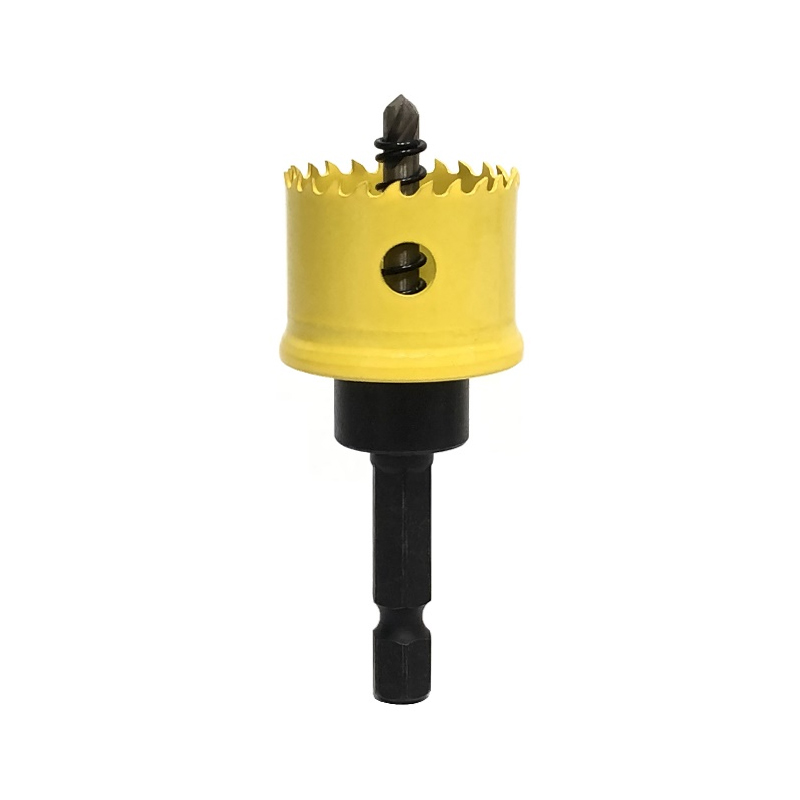
The pilot drill centers the saw. It starts the hole and keeps the saw from walking. A thin wall hole saw drill bit with a properly centered pilot starts the hole where the user wants it.
The pilot is smaller than the saw diameter, usually a quarter-inch or a standard size that fits the arbor. The pilot pulls out and the saw follows. A thin wall hole saw drill bit with a sharp pilot cuts the guide hole fast.
The arbor connects the saw to the drill. The arbor has the hex shank or the round shank for the chuck. A thin wall hole saw drill bit with a proper arbor transfers the torque without the wobble.
Here is what a thin wall hole saw drill bit needs to deliver:
- Thin wall body for low friction and fast cutting
- Narrow kerf for clean holes
- Fine teeth with shallow set
- Tooth material matched to the workpiece
- Sharp pilot drill for accurate starting
- Arbor that holds the saw true
The Electrician and the HVAC Installer
The electrician uses the thin wall saw for the holes in the metal enclosures and the panel boxes. The hole has to be round and clean for the conduit fitting. A thin wall hole saw drill bit in the electrician's kit makes the clean knockout.
The HVAC installer uses the saw for the holes in the ductwork and the sheet metal. The hole takes the pipe or the vent. A thin wall hole saw drill bit on the duct cuts the hole without deforming the metal.
The cabinetmaker uses the saw for the holes in the plywood and the laminate. The hole takes the hinge cup or the grommet. A thin wall hole saw drill bit on the laminate leaves the clean edge without the chipping.
The Wall That Flexes
The wall flexes because the user pushed the saw too hard into the thick material. A thin wall saw is for the thin material. A thin wall hole saw drill bit used within its limit stays true. The teeth tear the sheet metal because the tooth set was too aggressive. A shallow set fixes it. The pilot walks because the tip was dull. A sharp pilot starts clean.
A thin wall hole saw drill bit is the cutter for the clean hole in the thin material. The thin wall cuts fast. The fine teeth shear clean. The pilot starts true. Choose a saw with the right teeth for the material, a proper arbor, and the thin wall that does the job. The hole will be round and the edge will be clean. That is the point. That is what the thin wall saw is for.
Contact Us
Your email address will not be published. Required field are marked*

- Address: No.13, Qiaonan Road, Qingjiang Town Yueqing, Zhejiang, China
- Tel: +86-577-62260222
- FAX: +86-577-62260666
- E-mail: [email protected]
Copyright © Zhejiang Botian Tools Co., Ltd. All rights reserved.

Cutting Tools Manufacturer
