

 English
 русский
 Deutsch
Home · News · Industry News · Choosing the right Hole Saw Accessories for different drilling tasks
Industry News
Choosing the right Hole Saw Accessories for different drilling tasks
2026-05-25In construction, woodworking, and metal installation tasks, drilling tools are used in a wide range of environments. While hole saws handle the main cutting work, supporting parts often decide how smooth the process feels during actual use. Among these supporting components, Hole Saw Accessories play a practical role in keeping cutting stable, reducing vibration, and improving tool control in different materials.
These accessories are often overlooked, yet they become important once work conditions change from simple surfaces to more complex materials like steel panels, composite boards, or layered walls.
What Hole Saw Accessories actually include
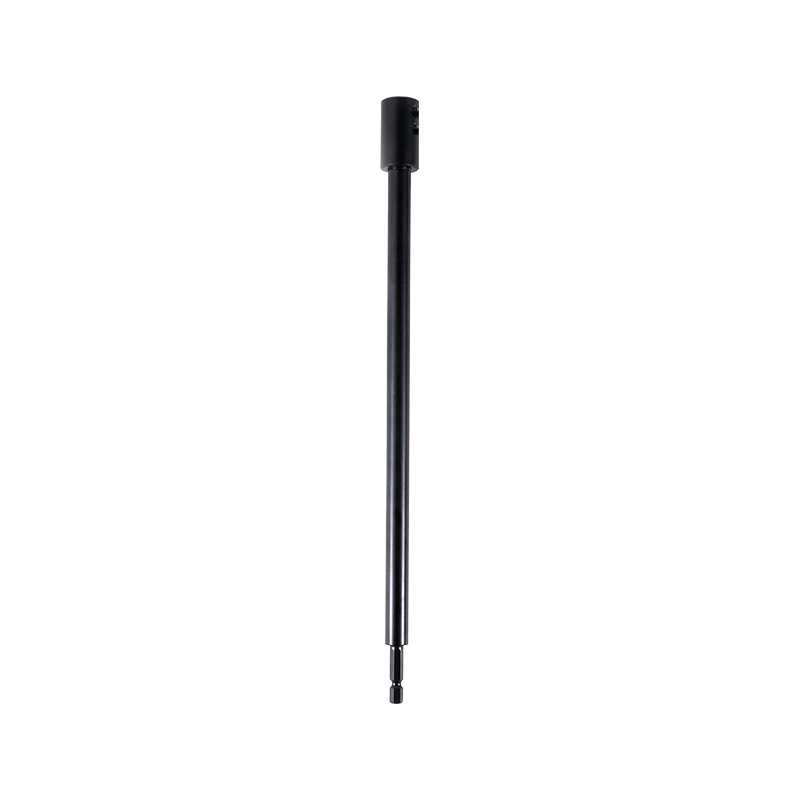
Hole Saw Accessories refer to a group of supporting parts used together with hole saw systems. These can include arbors, pilot drills, adapter kits, extension rods, and ejector springs. Each part contributes to how the cutting tool performs under different conditions.
A standard drilling setup depends on how well these components fit together. If alignment is not stable, cutting accuracy may shift, especially during deeper drilling tasks. That is why professionals often check compatibility between the hole saw and its accessories before starting a job.
In many cases, Hole Saw Accessories are chosen based on material type rather than tool brand alone. For example, metal cutting may require reinforced arbors, while woodwork applications may focus more on smooth chip removal.
Why stability matters during drilling
When a hole saw rotates at high speed, even small vibrations can affect cutting direction. This is especially noticeable when working on uneven or layered surfaces. Hole Saw Accessories help reduce this movement by keeping the tool centered and supported.
Pilot drills are often the starting point of contact with the material. They guide the saw into position before full cutting begins. Without proper guidance, the tool may shift slightly, creating uneven edges or unnecessary resistance.
Extension rods also play a role when working in deeper or hard-to-reach areas. Instead of forcing the drill at an awkward angle, these accessories allow better positioning and controlled pressure.
Material differences and usage environments
Different job sites require different accessory materials. Steel-based components are commonly used in heavy-duty environments, while carbon steel or treated alloys may be used for lighter tasks.
Hole Saw Accessories used in construction sites often need to handle dust, heat, and repeated pressure. In contrast, workshop environments may focus more on precision and surface finish.
Another factor is wear resistance. Over time, constant rotation and friction can reduce performance. Regular inspection helps identify when parts need replacement, especially pilot bits and adapters that experience frequent stress.
Compatibility and tool matching
One of the practical concerns for users is ensuring that Hole Saw Accessories match the hole saw size and drill machine type. Mismatched parts can create instability or reduce cutting efficiency.
Many manufacturers design universal adapter systems to reduce compatibility issues. These systems allow different saw sizes to connect with standard arbors, which helps simplify tool selection for contractors who work across multiple job types.
However, even with universal systems, checking thread size and locking mechanisms is still necessary before use. A secure connection between parts often determines how consistent the cutting process feels.
Storage, maintenance, and tool lifespan
Proper storage of Hole Saw Accessories can affect how long they remain usable. Keeping components dry and separated prevents rust and mechanical wear. Many professionals use dedicated tool cases to organize different sizes and types.
Cleaning after use is also important. Metal shavings and dust can accumulate around connection points, which may affect fitting during the next job. A quick inspection routine helps maintain smooth assembly and disassembly.
In some workshops, accessories are labeled by size or function to reduce setup time. This approach helps workers select the right component without repeated checking during busy schedules.
Although hole saw systems often receive more attention, supporting components play a steady role in daily drilling tasks. Hole Saw Accessories contribute to stability, alignment, and adaptability across different working conditions. From construction sites to workshop environments, they help tools perform in a more controlled way, especially when materials and project requirements change.
Contact Us
Your email address will not be published. Required field are marked*

- Address: No.13, Qiaonan Road, Qingjiang Town Yueqing, Zhejiang, China
- Tel: +86-577-62260222
- FAX: +86-577-62260666
- E-mail: [email protected]
Copyright © Zhejiang Botian Tools Co., Ltd. All rights reserved.

Cutting Tools Manufacturer
